
What Google released
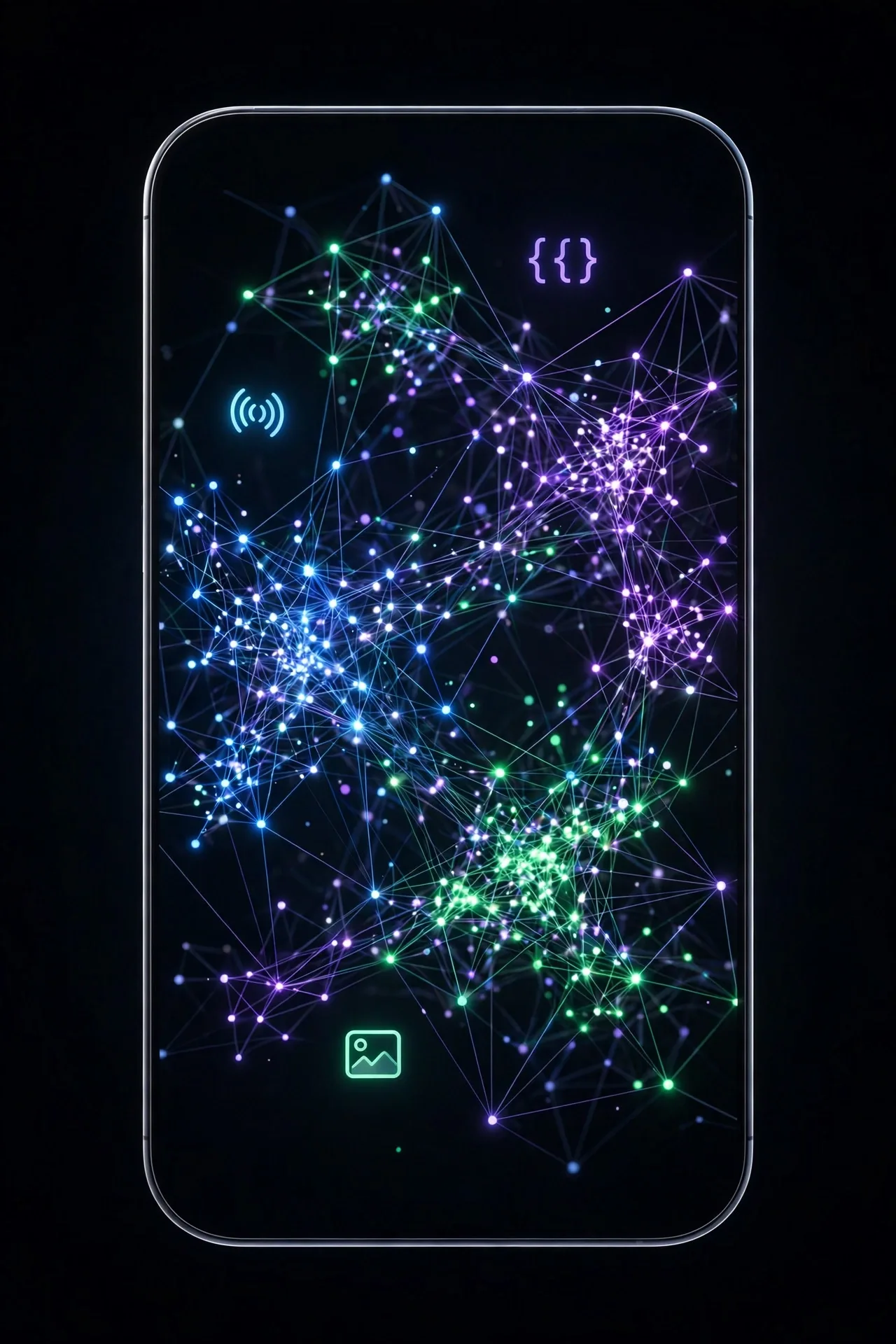
EmbeddingGemma 2 is Google's second-generation open embedding model, published on October 6, 2026 by Google DeepMind researchers. Unlike most embedding models that only understand text, it is natively multimodal: text, code, images, video frames, and audio all map into one unified embedding space, so a voice memo can retrieve a video clip and a text query can search hours of audio. The weights are open under the Apache 2.0 license, available on Hugging Face and Kaggle.
The design target is on-device AI. At 740 million parameters, built on the Gemma 4 architecture, the model is small enough to run locally on a phone — Google reports it needs only about 191MB of active RAM for text-only use and about 567MB for the full multimodal stack on a Pixel 11 Pro. Paired with Gemma 4 as the generator, it enables fully offline retrieval-augmented generation: search your own files, photos, and recordings with no data leaving the device.
The spec sheet
- 740M parameters, built on the Gemma 4 architecture
- Open weights under Apache 2.0 (Hugging Face and Kaggle)
- Natively multimodal: text, code, images, video frames, audio in one embedding space
- Leading scores among sub-1B multimodal embedding models on MTEB Code and MAEB (Google-reported)
- 8K-token context window (4x v1): up to ~5.5 minutes of audio, 29 images, or 58 video frames processed locally
- Modular encoders — load only what you need
- Matryoshka Representation Learning: truncate 768-dim vectors to 512/256/128
- Quantized: ~191MB active RAM text-only, ~567MB full multimodal on Pixel 11 Pro
- Deployable via MediaPipe, LiteRT, transformers, vLLM, llama.cpp, Ollama, LMStudio
Modular encoders: pay only for the modalities you use
The 740M parameters split into encoders you can load independently: a 270M text-only encoder, a 170M vision add-on, and a 300M audio add-on. Building a text search feature? Load just the 270M text encoder. Adding photo search later? Bolt on the vision module. This modularity is what makes the on-device story real — you never pay memory for modalities your app does not use.
| Encoder | Size | Use it when |
|---|---|---|
| Text-only | 270M params | Semantic search over documents, code, notes |
| + Vision | +170M params | Image and video-frame search, multimodal RAG |
| + Audio | +300M params | Voice memos, meeting recordings, audio search |
| Full multimodal | 740M total | Mixed collections: search everything with anything |
Matryoshka: shrink vectors without re-embedding
EmbeddingGemma 2 uses Matryoshka Representation Learning, which trains the 768-dimensional vectors so they can be truncated to 512, 256, or 128 dimensions at query time with graceful quality loss. The payoff is storage: Google reports up to 6x reduction in vector-database size. Store the full 768-dim vectors once, then serve the truncated size that fits your latency and memory budget — no re-indexing required.
What you can build with it
The canonical examples from the release: find the exact video clip described in a voice memo, or search hours of recorded audio with a typed text query — all offline. For developers, the interesting pattern is private, on-device RAG: embed a user's documents, photos, and recordings locally, retrieve with EmbeddingGemma 2, and generate answers with a small on-device model like Gemma 4. No embeddings ever hit a server, which matters for medical, legal, and enterprise data.
How it compares to the alternatives
Against closed embedding APIs, the trade is simple: you give up some precision and gain Apache 2.0 freedom, zero per-call cost, and data that never leaves the device. Against other open embedding models, Google's claim is leadership among sub-1B multimodal models on MTEB Code and MAEB — but note that most open embedders are text-only, so the real differentiator is the unified multimodal space plus the modular, phone-sized design.
Frequently Asked Questions
What is EmbeddingGemma 2?
EmbeddingGemma 2 is Google's open-weight multimodal embedding model, released October 6, 2026. It converts text, code, images, video frames, and audio into vectors in one shared space, so you can search across modalities — e.g., find a video clip using a voice memo — entirely on-device.
Is EmbeddingGemma 2 free and open source?
Yes. The weights are released under the Apache 2.0 license on Hugging Face and Kaggle, free for commercial use. There are no API fees because the model is designed to run locally — on phones, laptops, or your own servers.
How big is EmbeddingGemma 2 and can it run on a phone?
It has 740M parameters split into modular encoders (270M text, +170M vision, +300M audio). Quantized, it needs roughly 191MB of active RAM for text-only use and about 567MB for the full multimodal stack on a Pixel 11 Pro — comfortably phone-sized.
What is Matryoshka Representation Learning?
A training technique that lets you truncate the model's 768-dimensional embeddings down to 512, 256, or 128 dimensions at serving time without re-indexing. Google reports up to 6x storage reduction, which makes large local vector indexes practical on devices with limited storage.
What is EmbeddingGemma 2 best used for?
Private on-device RAG and cross-modal search: searching your documents, photos, and recordings with any input type, fully offline. Pair it with Gemma 4 as the generator for a complete local retrieval pipeline. For giant server-side indexes where maximum recall matters, larger embedding models may still be preferable.
Related Prompts

Conceptual Packaging Design Prompt — One Truth, One Clever Pack Idea
ChatGPT
Vintage Lithograph Poster Prompt — Two-Ink Print, Bold Posterized Art
ChatGPT
Event Poster Design Template Prompt — Any Theme, One Striking Layout
ChatGPT