





Start with the glossary, not the recording
Before you transcribe anything, write a glossary: every speaker's name, every product and project name, every acronym, and every domain term, spelled exactly as it should appear. Promptable models use this list to resolve ambiguous sounds, and it is the single highest-impact step in the whole workflow.
Transcribe this meeting in the original language. Speakers: Amira Haddad, Jonas Lindqvist, Priya Nair. Possible terms: HbA1c, metformin, Q3 rollout. Use these spellings only when supported by the audio. Label each speaker turn.
One recording, four passes
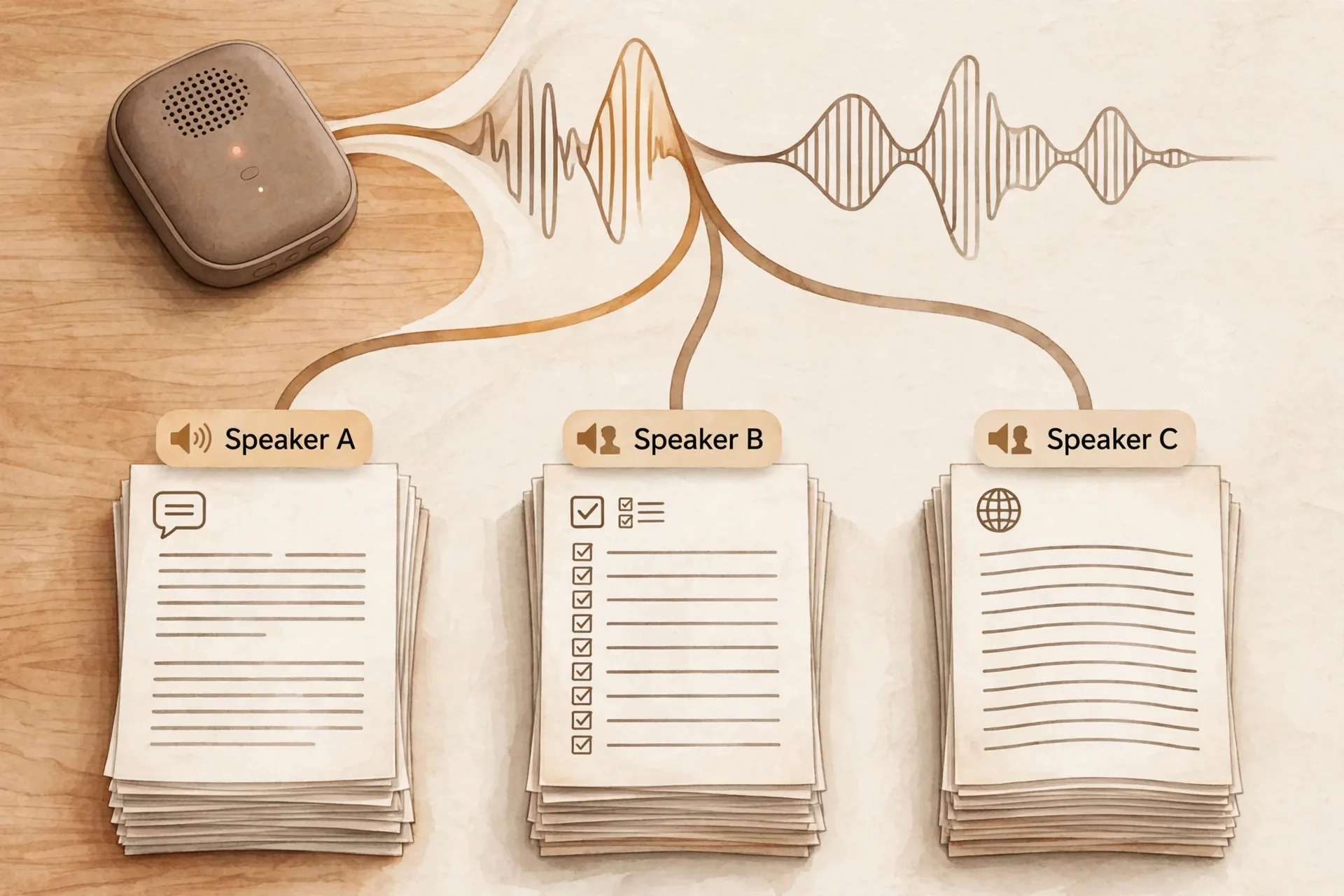
- Pass 1 — Verbatim with speaker labels: capture exactly what was said, with turns and timestamps
- Pass 2 — Cleaned transcript: remove filler and false starts, keep meaning and numbers intact
- Pass 3 — Decisions and actions: extract only decisions, owners and deadlines, with the timestamp of each
- Pass 4 — Translation or summary: only after the transcript is verified, so errors do not propagate
Format instructions that prevent rework
Tell the model the format you will file: timestamps or not, numbers as digits or words, headings for agenda items, and how action items should look. A transcript that arrives in your filing format needs no second pass of manual reformatting.
Return the cleaned transcript with a heading per agenda item, speaker labels on every turn, numbers as digits, and a final section titled Decisions listing each decision, its owner, and its deadline.
| Output | Prompt must specify | Check before filing |
|---|---|---|
| Verbatim transcript | Speaker labels, timestamps, glossary | Names, numbers, speaker turns. |
| Cleaned transcript | What to remove, what to keep | Meaning unchanged, numbers intact. |
| Decisions list | Owner and deadline required | Each decision traced to a timestamp. |
Frequently Asked Questions
Do I still need to fine-tune a transcription model?
Usually not first. A good glossary prompt fixes most name and term errors. Fine-tune only when the same errors survive careful context prompts across many recordings.
How do I handle speakers who sound alike?
Give the model a speaker list with roles, ask for turn labels and timestamps, and verify overlapping sections against the audio. No prompt fully solves identical-voice overlap.
Verbatim or cleaned — which should I file?
File verbatim for legal, medical and compliance records, and cleaned for internal reading. Generate both from the same recording, and keep the verbatim version as the source of truth.
Can one prompt do transcription, translation and summary at once?
It can, but do not. Each output inherits the last one's errors. Run transcript first, verify it, then translate or summarise from the verified text.