
Why Most Image Prompts Fail
Most weak AI images come from weak briefs: "a beautiful woman in a cafe" gives the model almost nothing to hold onto. Image models do not read your mind — they resolve ambiguity by falling back to averages. The fix is not longer prompts; it is structured prompts. Think like an art director briefing a photographer: every decision you name is one the model does not have to guess.
The Seven Ingredients of a Strong Prompt
- Subject — who or what, with enough specificity to be visualized: age, build, clothing, distinctive features
- Action or pose — what they are doing, the gesture, the energy
- Visual style — photorealistic, watercolor, editorial, 3D render, and the reference era or aesthetic
- Lighting — direction, quality, mood: hard side light, soft diffused daylight, warm amber glow
- Camera — lens, focal length, aperture, viewpoint: 85mm, f/1.4, eye level
- Composition — framing, aspect ratio, placement: 4:5 vertical, centered, head-to-thigh
- Negative constraints — what to exclude: text, watermarks, plastic skin, distorted hands
Before and After: The Same Idea, Two Ways
A portrait of a man in a cafe, cinematic.
That prompt leaves everything ambiguous — which man, what cafe, what kind of cinematic? Now the same idea with all seven ingredients:
Cinematic close-up portrait of a young man with tousled dark wavy hair and light stubble, wearing a cream knit sweater, seated at a marble cafe table. Warm amber side lighting glows along his cheekbone and sweater texture; dark background with circular bokeh from out-of-focus practical lights. Shot on an 85mm lens at f/1.4, shallow depth of field, subtle analog grain, soft halation, vertical 4:5 composition. No text, no watermark.
The difference is not talent — it is specificity. Every extra named decision is one fewer guess for the model.
Describe the Light, Not Just the Scene
Lighting is the single highest-leverage sentence in a portrait prompt. "Bright" is not a lighting plan. Name the direction (side light, backlight, overhead), the quality (hard and contrasty vs soft and diffused), the color temperature (warm amber, cool daylight), and the effect you want (glowing highlights, deep soft shadows, silhouette). If the image has a mood, the lighting sentence is where the mood lives.
Camera Language Gets You Photorealism
Models trained on photography respond strongly to camera vocabulary: focal length, aperture, film stock, grain. "85mm, f/1.4, shallow depth of field" does more for realism than "very realistic." Add era cues when you want a period look — "warm 1990s film photography, Kodak-style grain, slightly faded highlights" is a complete color grade in one sentence.
Negatives Are Half the Prompt
Every generator has failure modes — garbled text, extra fingers, plastic skin, watermark-like artifacts. Listing the failures you want excluded (no text, no watermark, no distorted hands, no oversharpening) is not optional polish; it measurably raises the hit rate. Keep a personal shortlist of negatives and reuse it.
A Reusable Template
“"[Style] portrait/image of [subject with specific details], [action/pose], in [setting]. [Lighting: direction, quality, color temperature]. Shot on [camera/lens], [aperture], [viewpoint], [aspect ratio] composition. No [negatives]."”
Save this template and fill it in every time. Consistency compounds: after a dozen structured prompts you will start seeing which ingredient was missing whenever a result disappoints — and you will know exactly where to add it.
Frequently Asked Questions
How long should an image prompt be?
Aim for 100–200 words covering all seven ingredients. Under 50 words usually under-specifies the image; over 300 words risks diluting the important instructions as attention spreads across the whole prompt. Specificity beats length.
Should I describe the camera if I'm not a photographer?
Yes — even basic camera words help. "Shot on an 85mm portrait lens, shallow depth of field" is enough to shift results toward professional-looking photography. You don't need to understand the optics; the model has seen the correlation between these words and the images they label.
Do negative prompts actually work?
They reduce common failure modes like garbled text, extra fingers and watermark-like artifacts. They work best as a short, consistent list of known generator weaknesses rather than as a second full prompt. They cannot fix problems the main prompt creates, such as a changed face in a reference-photo transformation.
Can I reuse one prompt across different AI models?
Mostly yes, with adjustments. ChatGPT's image model, Midjourney and Nano Banana all respond to subject, style, lighting and camera language, but each has quirks — Midjourney rewards style keywords and parameters, while ChatGPT follows longer structured briefs more literally. Test your template on each model you use.
What's the fastest way to improve if my images look generic?
Add the lighting sentence and the camera sentence. Generic-looking images almost always trace back to an unspecified look: no named light, no named lens, no named era. Two sentences — light and camera — fix most blandness.
Related Prompts
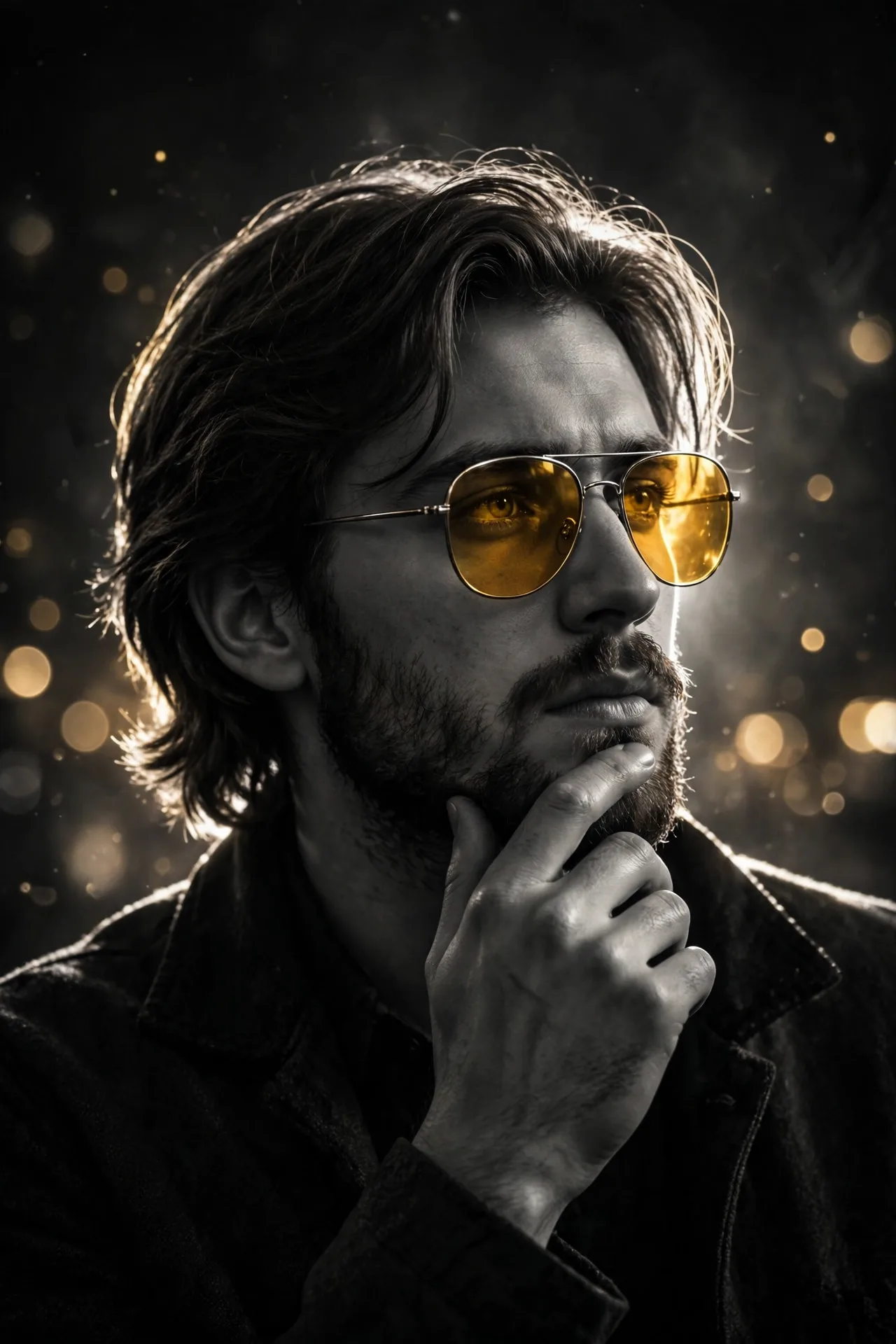
Film Noir Cinematic Portrait Prompt — Black & White with Amber Sunglass Accent
ChatGPT
Men's Luxury Fashion Editorial Prompt — Studio Portrait with Hard Light
ChatGPT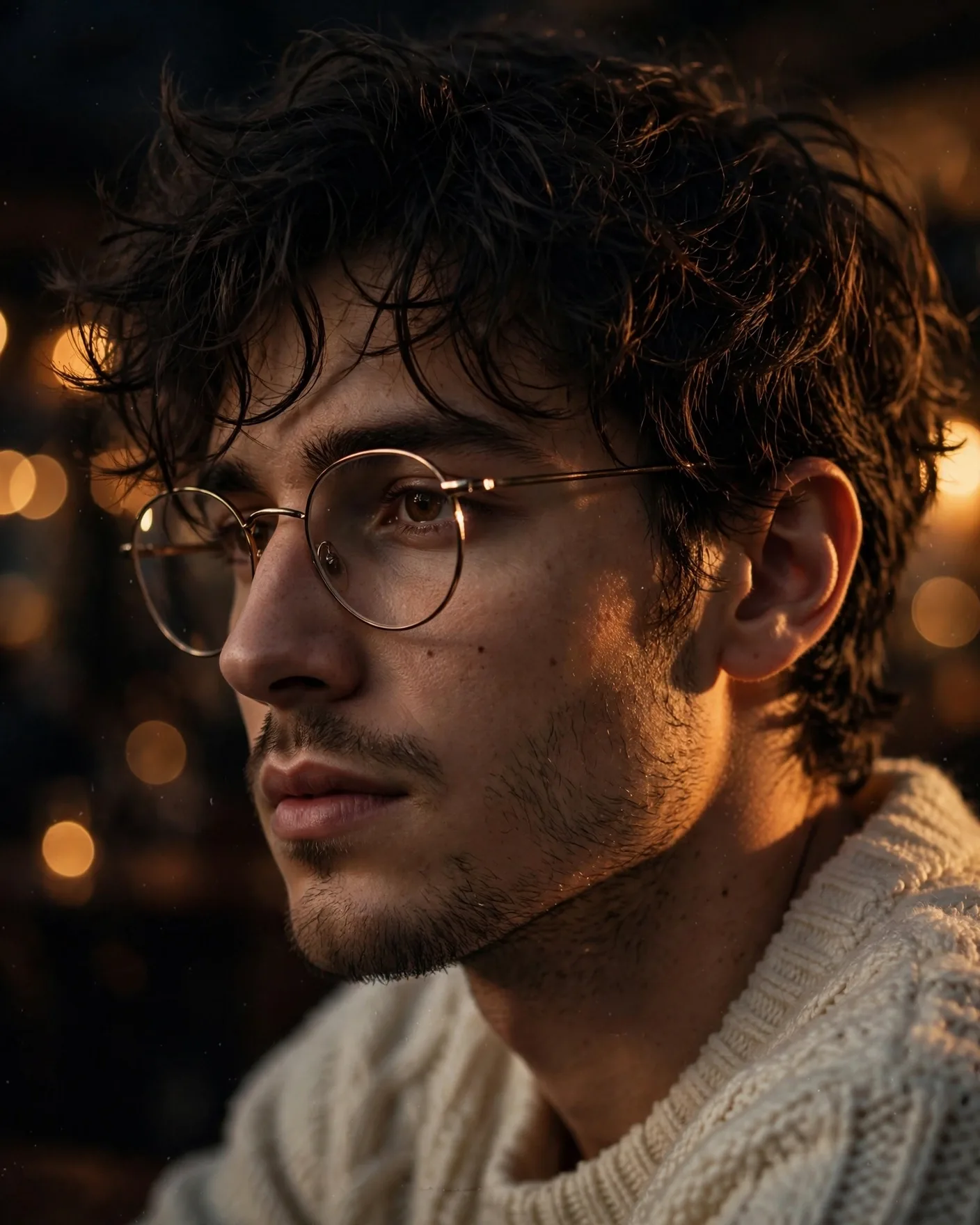
Warm Amber Cinematic Portrait Prompt — Low-Light Editorial Close-Up
ChatGPT